

Abstract
The concept of “luxury beliefs” has become increasingly influential in political and media discourse, particularly in debates surrounding climate policy, immigration and social justice. The term is commonly used to describe policy positions perceived to impose disproportionate costs on lower-income groups while conferring moral or cultural status on more affluent or highly educated groups. Drawing on recent experimental evidence from a nationally representative U.S. sample, this policy paper examines whether luxury beliefs are broadly recognised, associated with higher socioeconomic status, and strategically expressed as forms of elite signalling. The findings suggest limited evidence that luxury beliefs function as broad population-level status signals. However, participants consistently perceived several luxury belief statements as imposing uneven costs across social groups. The paper argues that, for Irish public policy, concerns about unequal exposure to policy costs remain politically important even where claims about elite signalling may be overstated. Policymakers should therefore focus less on presumed motives and more on the distributional consequences of policy change, perceptions of fairness, and their implications for public trust and policy legitimacy.
Luxury beliefs and contemporary political debate
The concept of “luxury beliefs” has become increasingly influential in political and media commentary. Popularised by sociologist Rob Henderson, the term refers to “ideas and opinions that confer status on the rich at very little cost, while taking a toll on the lower class”[1]. More broadly, luxury beliefs describe forms of ideological or moral signalling through which individuals display social status or cultural prestige.
Examples commonly associated with luxury beliefs include calls to abolish standardised testing in university admissions, defund the police, promote degrowth, or legalise casual drug use. These debates often involve concerns about whether the costs and benefits of policy change are distributed unevenly across social groups. The underlying argument is that affluent or highly educated groups may be better positioned to absorb the costs associated with these policies, while lower-income groups may face greater risks or reduced opportunities. For example, eliminating standardised testing may disproportionately disadvantage students from poorer backgrounds who rely on examinations to signal academic potential, while more privileged students may continue to benefit from informal networks, extracurricular activities or legacy admissions.
The concept became particularly prominent in the United States, where debates surrounding these, and related issues, increasingly interpreted some progressive social and political positions not only as imposing uneven costs across social groups, but also as forms of elite signalling insulated from those consequences[2]. More recently, similar language has begun to appear in Irish and British public debate[3]. Commentary surrounding Irish novelist Sally Rooney’s support for Palestine Action, for example, framed her political positions as forms of elite moral signalling associated with affluent cultural and professional classes[4]. More broadly, debates surrounding immigration, climate policy, housing and public services increasingly involve concerns about whether some groups are more insulated from the consequences of policy change than others.
These narratives matter because they shape perceptions of fairness, legitimacy and trust in public institutions. In many cases, disagreement is increasingly interpreted not only through concerns about unequal exposure to policy costs, but also through accusations that support for particular policies reflects elite signalling or performative moral behaviour rather than sincerely held ideological beliefs. Such interpretations may themselves influence political polarisation and trust in democratic debate.
However, despite the growing prominence of the concept in public discourse, limited empirical evidence exists on whether luxury beliefs actually function as broad forms of elite status signalling. A recent study by Samahita (2026) empirically tests the assumptions underlying the concept using a nationally representative U.S. sample based on sex, age, ethnicity and political affiliation. The study examines whether luxury beliefs are widely recognised, whether agreement with such beliefs is associated with higher socioeconomic status, and whether individuals strategically express these beliefs to signal status to relevant audiences. To do so, participants were presented with twelve policy and social statements commonly identified in public and media discourse as examples of “luxury beliefs”, as displayed in Table 1.
Table 1: Luxury belief statements used in the study
| Topic | Statement |
| Border | People and goods should be free to move between jurisdictions with no border restrictions. |
| College | College is not necessary to be successful. |
| CRT | Racism is a systemic issue and not only caused by individuals’ prejudices. |
| Degrowth | Societies should prioritize social and ecological well-being instead of economic growth. |
| Drug | Casual drug use should be legalized. |
| Family | All family structures (including polyamory) should be equally recognized in society. |
| Gender | Gender is a social construct and not based on biological sex. |
| Locus | The outcomes of your life are beyond your control. |
| Police | We should defund the police and redirect funds toward social services. |
| Religion | Religion is harmful to society. |
| SAT | Universities should eliminate standardized testing as a requirement for admission. |
| WhitePriv | White people enjoy a privilege over non-white people in this society. |
Are luxury beliefs widely recognised?
A central assumption underlying the concept of luxury beliefs is that they function as socially recognisable status signals. If individuals use these beliefs to signal status or cultural prestige, audiences must first be able to identify particular beliefs as markers of elite social identity.
To examine this, the study first asked participants whether they had previously heard the term “luxury beliefs”. Participants were then shown a definition of the concept and presented with the twelve topics shown above. For each topic, respondents were asked to identify which of three statements best matched the definition of a luxury belief: one corresponding to the luxury belief, one expressing the opposite position, and a third option labelled “neither”. Participants were incentivised to choose the answer they believed would be selected by the majority of respondents through entry into a lottery for a $100 bonus.
The study finds that only 39% of participants had previously heard the term “luxury beliefs”. Even after being provided with a definition, participants identified luxury beliefs at rates only modestly above chance, correctly identifying around five out of twelve statements on average. Recognition was somewhat stronger among participants already familiar with the term, who correctly identified an average of seven statements. Recognition was highest for topics related to policing and family structures, suggesting that awareness of luxury beliefs may be shaped more by politically salient media discourse than by broad public understanding.
These findings are important because broad forms of status signalling depend on social recognition. If most individuals do not consistently recognise particular beliefs as markers of elite status, then their ability to function as effective population-level status signals becomes limited.
Are luxury beliefs primarily held by higher-status groups?
Another central assumption underlying luxury beliefs is that they are disproportionately held by affluent or highly educated groups. If these beliefs function as forms of elite status signalling, support for them should be concentrated among higher-status individuals.
Before examining this relationship directly, it is useful to consider overall levels of agreement with the luxury belief statements. Figure 1 shows substantial variation in agreement across the statements. Several luxury belief items attracted meaningful support across the broader population, such as views related to the necessity of college and white privilege, while others, including statements related to locus of control and religion, received considerably lower levels of agreement. Overall, the distribution of responses suggests that these positions reflect wider ideological and political divisions rather than niche elite attitudes alone.
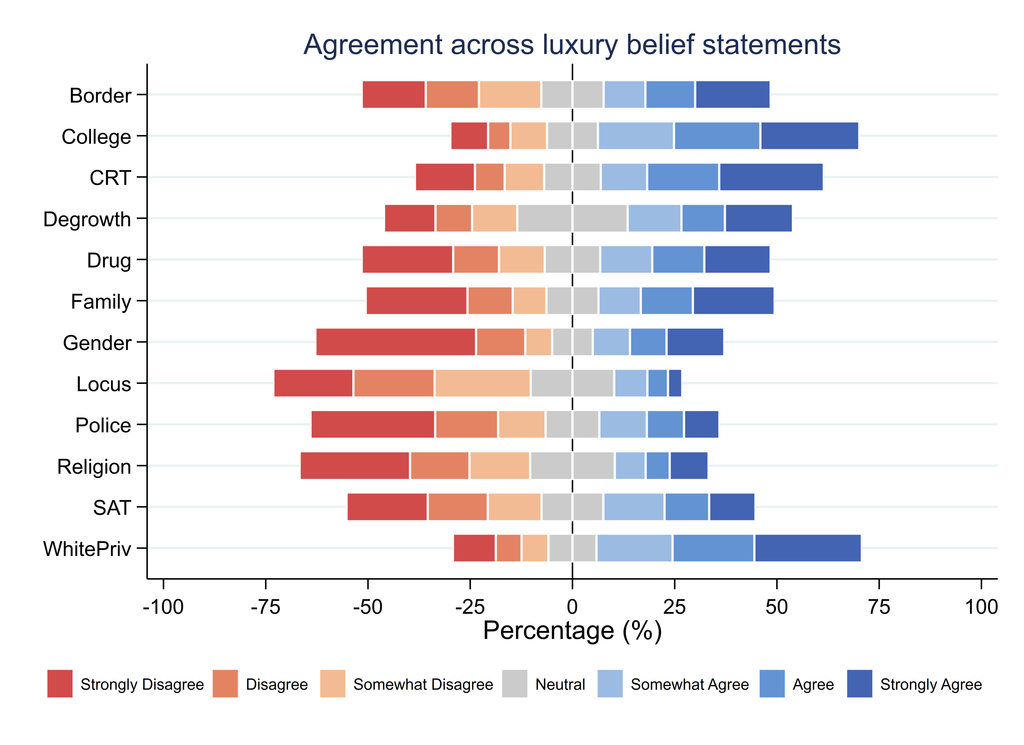
Figure 1 Agreement with luxury belief statements
Note: Distribution of agreement responses across luxury belief statements on a seven-point scale ranging from “Strongly Disagree” to “Strongly Agree”.
The study then examined whether support for these beliefs was systematically associated with higher socioeconomic status. The findings show little evidence that agreement with luxury beliefs is concentrated among affluent or highly educated respondents. As shown in Figure 2, most luxury belief statements display weak or inconsistent relationships with education and income, and several are negatively associated with these measures. While some beliefs were more strongly associated with left-wing political ideology, support for luxury belief statements was generally not concentrated among higher-income or more highly educated respondents.
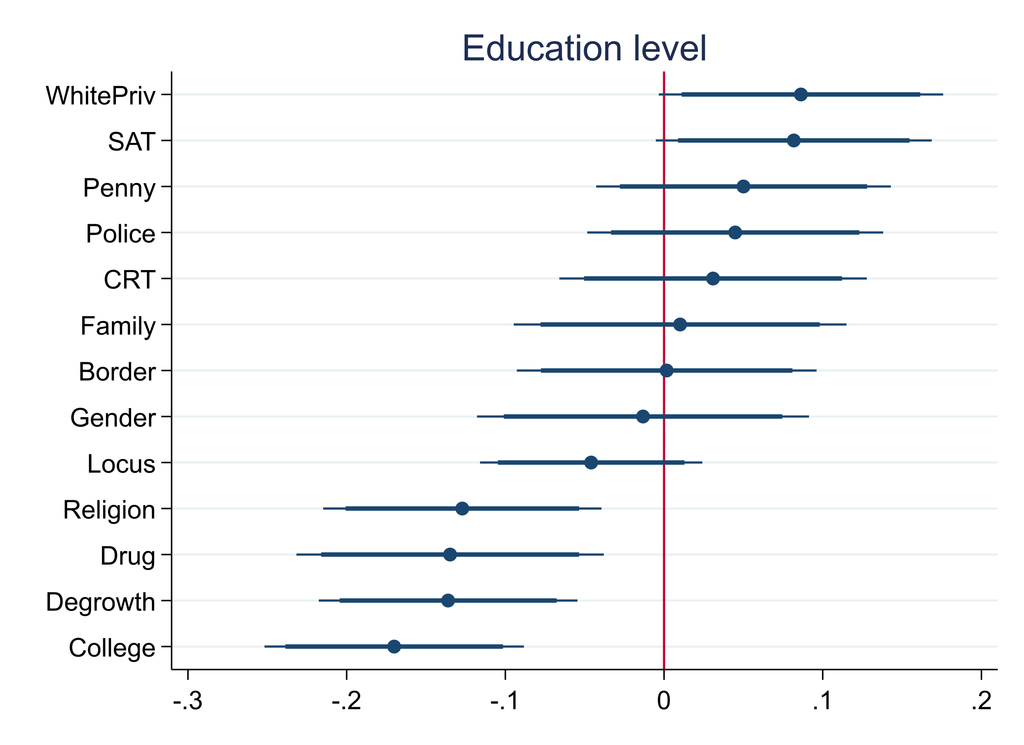
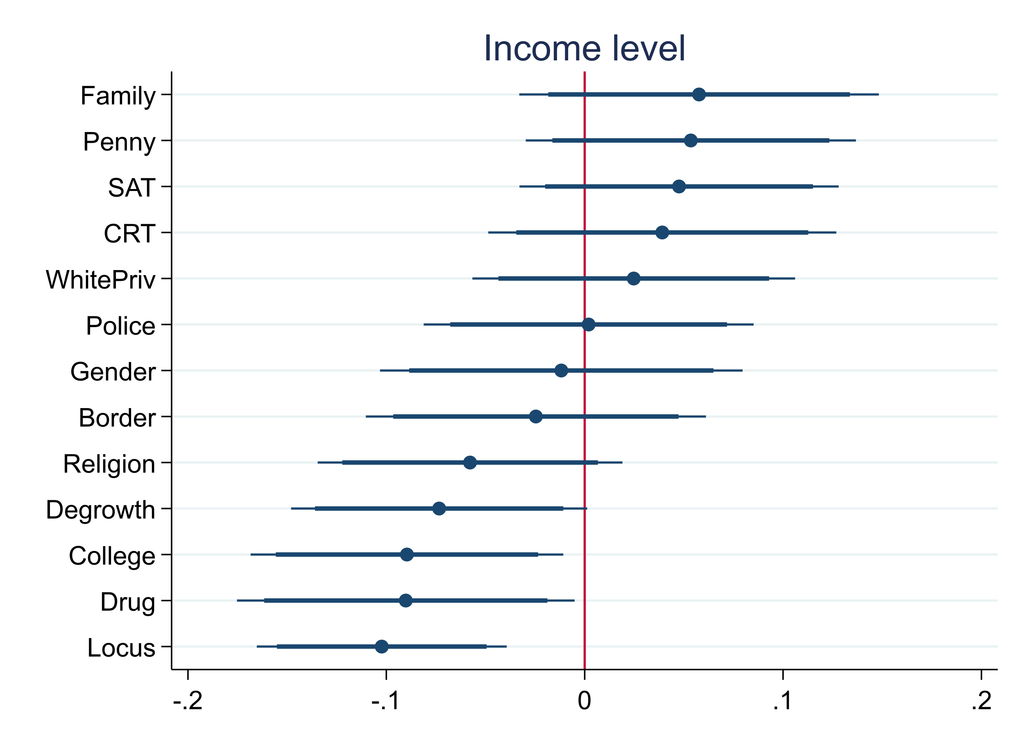
Figure 2 Agreement with luxury beliefs and socioeconomic status
Note: Estimated coefficients from separate OLS regressions of agreement with each statement on education and income measures. Education and income are coded as increasing ordinal categories. Source: Samahita (2026).
These findings challenge the assumption that luxury beliefs primarily reflect elite social positioning. Instead, agreement with these beliefs appears to be more strongly associated with broader ideological and political divisions than with socioeconomic status itself.
Are luxury beliefs used to signal status?
A further assumption underlying the concept of luxury beliefs is that individuals strategically express these beliefs in front of socially or politically relevant audiences in order to gain reputational benefits. If luxury beliefs function as forms of status signalling, individuals should express stronger agreement when facing audiences likely to reward such views socially or politically.
To examine this, participants were informed that their responses would later be shown to another participant identified as either a Democrat or Republican. The study then tested whether individuals expressed stronger agreement with luxury belief statements when facing politically sympathetic audiences, particularly Democrat audiences.
Overall, the study found little evidence of strategic signalling behaviour. Participants did not generally express stronger agreement with luxury belief statements when their responses would be shown to Democrats rather than Republicans. The only suggestive evidence emerged among politically independent participants, who displayed somewhat higher agreement with these statements when paired with a Democrat audience.
Taken together, these findings suggest that support for luxury belief statements is more likely to reflect sincerely held ideological or political positions than broad forms of strategic elite status signalling.
Perceived distributional consequences
Although the study finds limited evidence that luxury beliefs broadly function as status signals, an important related question is whether individuals nevertheless perceive these beliefs as imposing uneven costs across social groups.
To examine this, participants were randomly assigned to one of the twelve luxury belief statements shown above. Respondents were then asked to imagine a scenario in which policies were determined by individuals who agreed with the statement and to indicate whether they believed the policy would harm, have no effect on, or benefit different social groups. Participants evaluated the perceived effects separately for lower- and working-class groups, the middle class, and upper-middle- and upper-class groups.
The results are shown in Figure 3. Responses exhibit substantial variation, suggesting that participants were not simply converging on a single perceived “correct” answer. However, clear distributional patterns emerged. For six of the twelve topics, participants on average perceived the lower and working classes to be harmed while upper-middle and upper-class groups benefited. The largest perceived inequalities in welfare effects were associated with issues related to casual drug use, gender identity, locus of control, and religion.
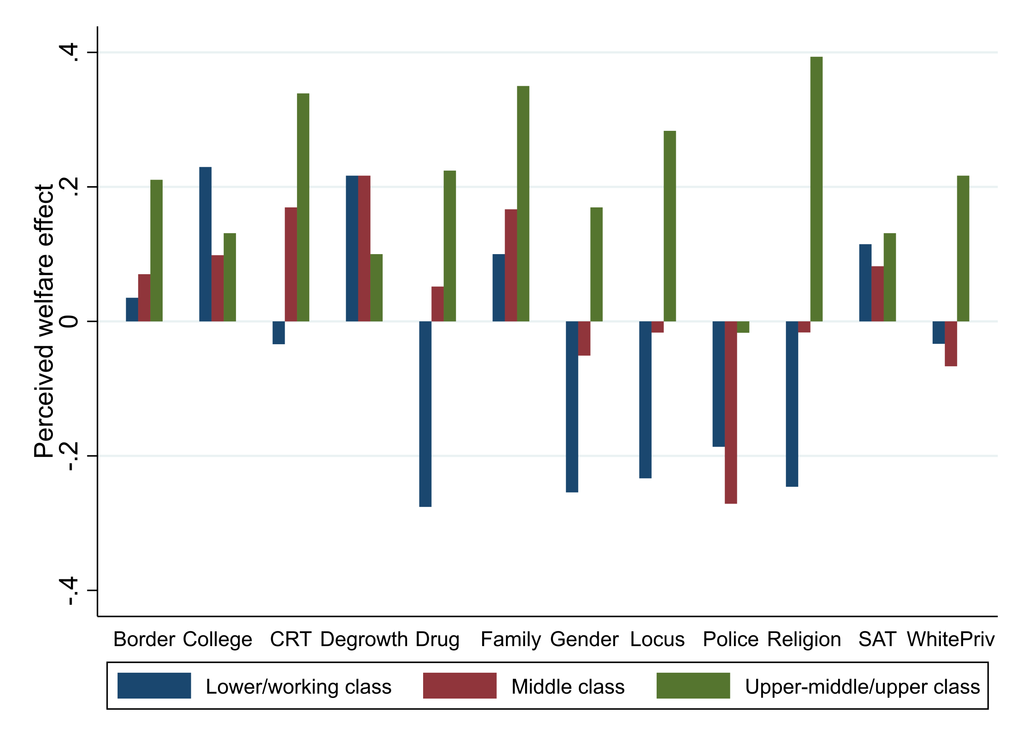
Figure 3 Perceived welfare effects of luxury beliefs across social groups
Note: Average perceived effect of each luxury belief on lower/working-class, middle-class, and upper-middle/upper-class groups. Participants indicated whether each belief was perceived as harmful (−1), neutral (0), or beneficial (1). Source: Samahita (2026).
These findings suggest that concerns about distributional fairness may persist independently of whether support for these beliefs is primarily motivated by status signalling.
Implications for Irish public debate and policy
The findings have important implications for how political disagreement is interpreted in Irish public debate. Discussions surrounding immigration, climate policy, housing and public services are increasingly framed through the lens of “luxury beliefs”: the idea that socially insulated or highly educated groups support policies whose costs are disproportionately borne by lower-income or less politically powerful communities.
However, the study suggests caution in interpreting disagreement primarily through accusations of elite signalling or insincere belief expression. Public recognition of luxury beliefs remains relatively limited, and the evidence provides little support for the view that these beliefs function as broad forms of strategic status signalling within the general population. In particular, agreement with luxury belief statements is not strongly associated with higher income or education, and individuals do not generally express stronger agreement in front of politically sympathetic audiences. Instead, support for these positions appears more consistent with sincerely held ideological and political beliefs than strategic reputation-seeking behaviour. Framing disagreement primarily as performative status signalling may therefore oversimplify ideological differences, deepen political polarisation and weaken institutional trust.
At the same time, the findings do not imply that concerns about unequal policy burdens are unfounded. Participants consistently perceived several luxury belief statements as benefiting upper-middle and upper-class groups while imposing greater costs on lower-income groups. These perceptions of unequal exposure to policy costs remain politically significant even where evidence for elite signalling is relatively weak.
This is particularly relevant in Irish debates surrounding climate transition, housing and immigration. Climate and transport policies may impose different adjustment costs across urban and rural households depending on access to public transport, remote work opportunities or sustainable alternatives. Similarly, restrictive planning policies may be perceived as benefiting existing homeowners while contributing to affordability pressures for younger households and renters.
Debates surrounding immigration and public services also increasingly involve concerns about uneven impacts across communities. Recent ESRI research finds that attitudes towards immigration in Ireland remain comparatively positive overall, but become less positive among individuals experiencing material deprivation, feeling economically worse off relative to others, or expressing lower levels of optimism about the future (Timmons et al., 2026). This suggests that concerns surrounding immigration are often shaped by perceived economic insecurity and distributional pressures rather than simply ideological hostility.
For policymakers, perceptions of unequal exposure to policy costs can shape trust, legitimacy and support for policy implementation. Even where policies are evidence-based, perceptions that some groups are insulated from adjustment costs may increase political resistance and weaken public trust.
Elite institutional environments
While the study finds limited evidence that luxury beliefs function as status signals in a nationally representative sample, it leaves open the possibility that signalling may still occur within narrower elite institutional environments.
This may be particularly relevant in universities, media organisations, professional networks and highly engaged policy communities, where reputational incentives and ideological conformity pressures may be stronger. In such settings, certain beliefs may still function as markers of social or professional identity even if they do not operate as broad population-level status signals.
For Irish policymaking, this highlights the importance of maintaining broad participation in consultation and avoiding overreliance on narrow institutional or professional perspectives.
Conclusion and policy implications
The concept of luxury beliefs has become increasingly influential in political and media discourse. However, recent empirical evidence challenges several assumptions underlying the concept. Even in the United States, where debates surrounding luxury beliefs are particularly prominent, awareness of the term outside elite settings remains relatively limited, agreement with associated statements is not strongly linked to higher education or income, and there is little evidence that these views broadly function as forms of elite status signalling.
At the same time, the findings suggest that perceptions of unequal exposure to policy costs remain politically important even where evidence for elite signalling is relatively weak. Across policy areas such as climate transition, housing and immigration, concerns about fairness, burden-sharing and institutional legitimacy can strongly shape public support for policy implementation.
Several implications follow for Irish public policy. First, policymakers and public commentators should exercise caution when claims about “luxury beliefs” are made in public debate. While concerns about unequal policy burdens may be genuine, interpreting disagreement primarily through accusations of elite signalling or performative belief expression risks oversimplifying ideological differences, deepening political polarisation and weakening democratic trust.
Second, policymakers should focus less on presumed motives and more on the distributional consequences of policy choices. Questions of who bears adjustment costs, who benefits from policy change, and who possesses the capacity to adapt are central not only to policy design, but also to public trust and policy legitimacy.
Finally, consultation and policy communication processes should engage a broad range of social groups and geographic communities. Policies perceived as reflecting only highly educated, professional or urban perspectives may face greater legitimacy challenges and lower levels of public trust.
References
Samahita, M. (2026). “Luxury beliefs”: Signaling through ideology? Journal of Behavioral and Experimental Economics, 121:102538.
Timmons, S., Fox, C., Carron-Kee, E., Murphy, K., & Lunn, P. (2026). The role of misperceptions in attitudes to immigration. ESRI Research Series No. 225, January 2026.
[1] “‘Luxury beliefs’ are the latest status symbol for rich Americans”, New York Post, accessed 28 May 2026.
[2] See, for example, “Microlooting Is a Luxury Belief”, Wall Street Journal; “When Progressive Ideals Become a Luxury”, New York Times; and “A new book rebukes the “luxury beliefs” of America’s upper class”, The Economist, all accessed 22 May 2026.
[3] See, for example, “The dangerous myth of degrowth”, The Spectator; Matt Goodwin, “Rise of the Luxury Belief Class”; and “Do Irish people have white privilege?”, UnHerd, all accessed 22 May 2026.
[4] “Sally Rooney’s smugness is boundless”, The Telegraph, accessed 22 May 2026.