

Summary
Climate change is one of the most pressing global challenges of our time, requiring climate action that can be advanced through effective climate communications. In designing such communications, it is essential to understand stakeholders’ key existing needs and challenges. With this aim, a climate communication needs and challenges assessment was conducted with 60 stakeholders from four key sectors in Ireland: agriculture and land use, transport, renewable energy, and local authorities. The assessment was carried out through surveys and online sessions held between November 2024 and February 2025 and produced key outcomes organised by sector. These outcomes will be used to inform the design and development of climate communication strategies through a Community of Practice undertaken as part of an EPA-funded research project, “Using Worldviews to Inspire and Scale Climate Action” (UWISCA).
Introduction
UWISCA is a three-year research project funded by the Environmental Protection Agency (EPA) as part of its 2021-2030 research programme. The project applies a worldview lens to climate communications in Ireland to help design messages that amplify the psychological and emotional drivers influencing people’s motivation to act on climate change. Worldviews can be defined as the fundamental ‘lenses’ through which we see and filter reality1. Essentially, they comprise the assumptions, beliefs and values which shape our mental and emotional engagement with the world, as well as our behaviour and decision-making. A key element of the UWISCA project is a Community of Practice (CoP), comprising relevant Irish organisations working with climate communications and public engagement, who will utilise the findings in this report to co-design and test a set of messages on various aspects of climate change, using a worldviews lens.
In order to inform the choice of message topics for the CoP, it was necessary to assess the existing climate communication needs and challenges for stakeholders in the four key sectors, which are the focus of the project – Agriculture and Land use, Transport, Renewable Energy and Local Authorities – as this information was not readily available elsewhere. This was done through a consultation process with key stakeholders across all four sectors between November 2024 and February 2025. This report identifies and discusses the key climate communication needs and challenges identified by stakeholders in the four sectors.
Methodology
A two-stage consultation process was used to assess the existing climate communication needs and challenges for stakeholders in each sector (Figure 1). First, an initial mapping exercise identified 143 key stakeholders across all four sectors, who were invited to complete an online survey in November 2024. The survey questions aimed to collect information about climate communication needs, challenges and good practices in each of the four sectors. The survey data was analysed, compiled and shared with stakeholders, who were then invited to attend follow-up online sessions in February 2025 to prioritise the main climate communications needs and challenges in their sector. A total of 60 stakeholders participated in the whole process: 24 from the Agriculture and Land Use sector; 17 from the Local Authorities sector: 10 from the Renewable Energy sector, and 9 from the Transport sector. Their input was integrated with the initial survey analysis to produce an assessment report for each of the four sectors, which are available on the project website at: https://www.climateworldviews.com/climate-communication-needs-and-challenges.html
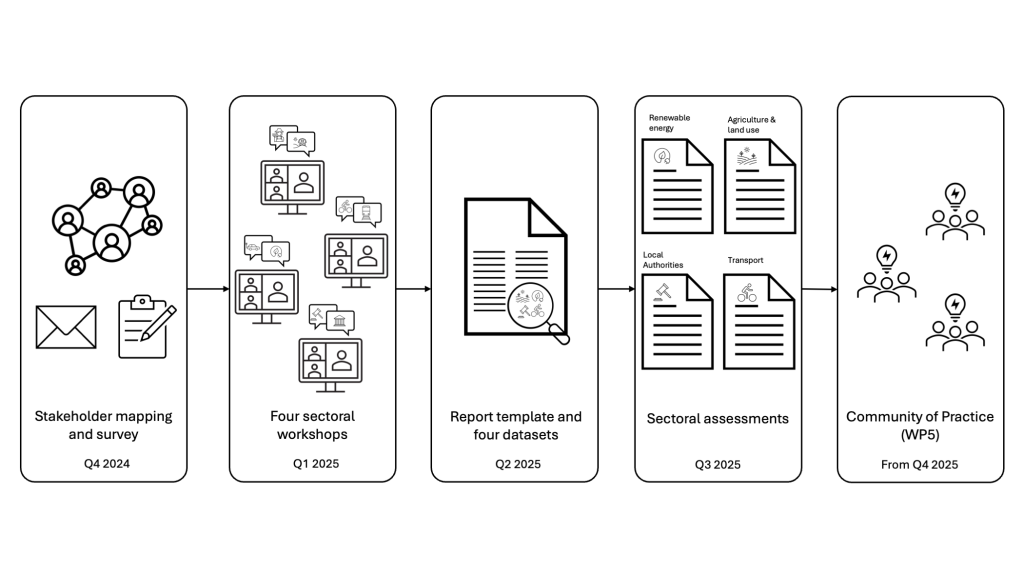
Figure 1: Sectoral stakeholder climate communication needs and challenges assessment methodology.
Key cross sectoral communication challenges and needs
The following three climate communication challenges were identified by stakeholders across all four sectors:
- Countering misinformation and disinformation around climate change and emissions reductions remains a significant challenge across all sectors, as does the need for more nuanced and expert media coverage.
- Chronic underfunding of local authorities for climate action, especially in relation to communications, is an ongoing challenge.
- Many people feel overwhelmed and lack agency in relation to tackling climate change.
The following three climate communications needs were identified by stakeholders in all four sectors:
- A need to identify the different potential audiences within a sector and the most appropriate message for each
- A need to better communicate the co-benefits of emissions-reduction actions (e.g. improvements to health, better energy security, increased economic sustainability of agricultural enterprises, etc.).
- A need to highlight positive stories and engage trusted messengers.
A more detailed overview of the climate communications challenges and needs in each of the four sectors is provided in the four sections below.
Agriculture and Land Use Sector – key challenges and needs
In Ireland, the agricultural sector contributed approximately 38% of national greenhouse gas emissions (GHG) in 20232. The agriculture sector also plays a role in emissions attributed to the land use, land use change and forestry (LULUCF) sector, which is currently a net source of emissions in Ireland2. As part of Ireland’s Climate Action Plan3, the agricultural sector has a 25% emissions reduction target by 2030 from 2018 levels. However, full implementation of all currently proposed measures is unlikely to deliver on this target2, and emissions in this sector have only reduced by 4.6% since 20184. To support greater ambition in climate action, effective communications need to be designed to address the following challenges and needs as identified by stakeholders in this sector.
The top three climate communication challenges identified by the stakeholders in the agriculture and land use sector were:
- The prevalence of misinformation on climate science, sectoral emissions, reduction targets, action required, etc., resulting from “deliberate” misinformation campaigns and information gaps among some in the farming community
- Messages regarding the negative economic implications of climate action for farmers, particularly regarding output and profitability, travel more easily than positive ones.
- Media-related challenges, including a lack of informed, nuanced and balanced discussion of climate issues in the sector; the small number of agricultural journalists; and difficulties reaching different groups in the sector.
These priorities reflect other research findings – for example, the National, Economic and Social Council5 noted that the challenges of climate action in the sector requires a critical need to actively engage farmers in diverse contexts. They also noted how those in favour of sectoral climate action have been criticised for being unrealistic, while those opposing it are accused of ignoring opportunities within climate action for farmers. In addition, the Organisation for Economic Co-operation and Development6 has identified how biased or misleading information may be deliberately spread by interest groups to undermine the credibility of scientific evidence around agriculture and climate change and how the resulting polarisation can be difficult to address by means of information provision on its own. Research has also identified the existence of mixed messaging around the scale of the challenges involved5, something which was also highlighted by stakeholders in the present study, particularly in relation to ineffective communication within the sector and to the general public regarding demonstrable research, innovation, schemes, education and best practice employed across the farming sector to meet climate targets. Stakeholders also noted the challenge that arises when climate action is perceived to question farmers’ systems and way of life, since farming is a big part of many farmers’ senses of identity.
In terms of climate change communication needs in the sector, stakeholders identified the following top three priorities:
- Facilitate informed and stimulating discussions on climate change to build support for agriculture and land use-related climate policy.
- Support farmers to take actions to reduce overall sectoral emissions while protecting the economic and social sustainability of their business.
- Showcase examples of positive action and explain the science behind why these actions are necessary.
These priorities point to the importance of supporting more informed communications and debate, for example by using a combination of participatory and practical evidence-based approaches to enable greater engagement by farmers7 and more active participation amongst diverse groups in the sector to support efforts at ensuring the transition to low-carbon food production systems is a just and fair one5. More widely, focus-group dialogue by NESC5 found that nearly all the farmers they engaged with were prepared to take action on climate if given the necessary support, and they share a sense of optimism that the opportunity exists to move forward in a positive way.
Transport Sector – key challenges and needs
In 2023, the transport sector in Ireland comprised 21% of Ireland’s GHG emissions, with road transport by passenger cars and freight accounting for almost all of this (95%)1. Ireland has set a target of reducing transport-related GHG emissions to 50% of 2018 levels by 20301. However, achieving this goal will require more than 2 Mt CO₂ eq. of reductions through significant behavioural changes, including reducing car usage, increasing fossil fuel prices, supporting remote working, and boosting cycling rates8. Reaching these reductions in the transport sector will require strong climate communications to promote climate action, while also identifying and addressing existing needs and challenges.
The top three climate communication challenges in the transport sector, as identified by the stakeholders were:
- Sustainable transport benefits are less immediately visible (unlike energy retrofitting, for example) and take time to accrue.
- The variation in public transport availability across the country or within local areas means the same options are not available everywhere.
- There are communication resource constraints at both national and local government level. In particular, resources for promoting public and active transport are significantly surpassed by car company advertising budgets promoting private cars, which means the latter tends to dominate transport discourses.
As well as reducing GHG emissions, more sustainable forms of transport can bring benefits such as improved health and living conditions, but it can be a challenge to communicate them to the public, especially when they may only become evident over the longer term9. Evidence also confirms the opinion of stakeholders in this study that unequal access exists, for example, the use of private cars in rural areas in Ireland (84%) is higher than in urban areas10. This situation is made more challenging when there are still persistence campaigns to promote the use of private cars. However, it has been the focus of initiatives by countries such as France, where the government has introduced a system of air quality (“Crit’Air”) certificates for private cars based on their level of emissions and will require car advertisements from 2028 onwards to encourage people to walk, cycle or take public transport and also list the vehicle’s emission class11.
In terms of climate communications needs for the transport sector, stakeholders identified the following:
- Multiple audiences need to be engaged and different approaches are required for each (e.g. local and national government, general public, NGOs, etc.).
- A need to communicate the co-benefits of actions required to reduce transport-related emissions, including improvements in local environmental quality, health and wellbeing, financial savings and improved accessibility.
- Highlight the need to decarbonise and reconfigure transport, particularly in relation to active travel (walking and cycling) combined with public transport.
These priorities reflect a key element of communications design in general, where it is critical to accurately identify the multiple and diverse sub-groups in the target audience and their specific beliefs, attitudes, values, preferences, and behaviours12. In addition, there is a need to find frames that fit the different sub-groups and to leverage appropriate messages and channels of communication13. For instance, by focusing on emphasising the co-benefits of decarbonising the transport sector, such as increased safety and reductions in air and noise pollution, but also more personally tangible benefits such as improved mobility, reduced traffic and parking congestion, and financial savings14.
Renewable Energy Sector – key challenges and needs
The use of fossil-fuels and other non-renewable sources for energy generation accounted for 56% of Ireland’s GHG emissions in 202315. As part of action to mitigate those emissions, the Irish government has set a target for the country’s renewable energy share of 80% by 20303. In terms of electricity generation in particular, renewable sources accounted for 41% of Ireland’s gross electricity supply in 2023, with wind energy accounting for 34% and the remainder from other sources such as solar, hydro and biomass16. Wind energy, solar photovoltaics and battery storage will be key to reaching the 2030 targets, while significant growth in offshore wind infrastructure is required in the longer-term2.
The top three climate communication challenges for this sector identified by the stakeholders were:
- Meeting people where they are by showing how renewables can help solve other pressing challenges they face.
- Counter disinformation and myths, particularly regarding wind energy. This is complicated by the fact that many views may be partially fact-based, such as the environmental and social impacts that can result from the extraction of minerals required for the production of storage batteries, for example17.
- A lack of commitment from elected and state agency leaders regarding clear and consistent communications on the need for a climate transition at all levels.
These priorities demonstrate the importance of building a trust that renewables can deliver positive benefits to individuals and communities. For example, a shift to renewably generated electricity can result in human health benefits from improved air quality18, while retrofitting can support those in energy poverty and contribute to a just transition19. However, those messages need to be clearly communicated and understood by the public. The role of renewable electricity in improving Ireland’s energy security is another important message to be communicated, with benefits including reducing the country’s energy import dependency and contributing to net-zero targets2. Nevertheless, the way in which the costs and benefits of renewables are framed was found to be a potential barrier to domestic uptake of renewables, with longer-term benefits emphasised at the expense of shorter-term gains20.
In terms of key transport-related climate communications needs and messages, the stakeholders identified the following top three priorities:
- Emphasise the benefits of new energy technologies like solar, wind, and heat pumps as feasible and more secure alternatives to fossil fuels, despite current cost and other constraints.
- Promote acceptance of the transition to renewables and the accompanying infrastructure (e.g., wind, solar, etc.) as means of combining climate action with improvements in economic prosperity and energy security.
- A need for trusted or expert sources to become the face and voice of renewables and help drive social acceptance
Recent studies show that a majority of people in Ireland support the expansion of renewable energy infrastructure, which is a promising basis for communications. For example, the EPA’s Climate Change in the Irish Mind research found that 88% of those “Alarmed” about climate change, 85% of those in the “Concerned” category and 73% of those in the “Cautious” category support the expansion of renewable energy infrastructure while only 41% of people in the “Doubtful” category oppose it21. Similarly, a recent survey by the SEAI22 found that 65% of people support further expansion of wind energy and 82% support the expansion of solar photovoltaics. However, other research20 indicates that perceived barriers still exist, such as people’s uncertainty about their capacity to install renewable energy technologies in their homes and communities. Emphasise the benefits of new energy technologies like solar, wind, EVs and heat pumps are a feasible and more secure alternative to fossil fuels, despite current cost and other constraints.
Promote acceptance of the transition to renewable energy sources and the necessary infrastructure (e.g., wind, solar, etc.) as a form of systematic climate action as well as a source of economic prosperity and energy security
Local Authorities Sector – key challenges and needs
Each of Ireland’s 31 Local Authorities is required to reduce GHG emissions arising from its own activities and to work in partnership with others to reduce emissions within their wider community area. This includes the development of Local Authority Climate Action Plans and accompanying monitoring and reporting systems to guide this work3. Implementation of measures must be accompanied by clear communication with different local stakeholders, and to achieve this, communication strategies should consider challenges and needs in their design.
The top three climate communication challenges for the local authorities’ sector, as identified by the stakeholders were:
- The challenge of translating complex data into easy-to-use information for audiences with varying levels of climate knowledge.
- Centralised funding models and policymaking with chronic under-funding of local authorities impacting the staffing required for climate communications and implementation work at a local level.
- A lack of perceived relevance and urgency resulting in a focus on low-level actions such as recycling, instead of meaningful action across different sectors such as electricity and transport. This may possibly be linked to funding restrictions.
Access to accurate and trusted information on climate change is a crucial element to boost people’s engagement. However, the 2023 National Dialogue on Climate Action21 reported that citizens struggled with much of the vocabulary that lies at the heart of climate change – for example, terms such as rewetting, climate mitigation, climate adaptation, net zero and Just Transition all fed into the sense that the language of climate change is scientific, complex, and difficult to understand. This can undermine support for climate policies and initiatives and also make people more susceptible to misinformation20. A related factor is the relative lack of financial resources for climate communications work, especially since Ireland’s overall public spending at local level is amongst the lowest in the EU, comprising just 9.7% of all government spending in 202223.
In terms of climate change communications needs in the sector, stakeholders identified the following top three priorities:
- Clearly identify the different needs and wants of community groups before starting the process of climate engagement and action.
- Communicate the importance and benefits of collective community action on climate and that every action matters, including the potential for more rapid and equitable progress and tangible local benefits for all income groups when communities work together.
- Increase awareness that buildings and transport are key emissions sources which must be the focus of action across all work programmes and activities.
Scaling willingness and capacity of communities to engage in and support climate action is critical to the success of the low-carbon transition. A majority of people in Ireland say that climate change is important to them personally (89%) and that the country has a responsibility to do what it can to reduce emissions (87%)24. In this regard, the importance of involving citizens and communities in the design and implementation of climate action initiatives is increasingly recognised at both national and EU level, along with the need to ensure that this is done in an inclusive, legitimate and democratic manner25. Linked to this is the need to clearly understand how different groups’ understanding of and reasons for engagement in climate action may vary, so that communications can be designed and delivered in a more tailored manner. For example, ongoing results from the EPA’s Climate Change in the Irish Mind project indicate four distinct audiences in the Irish population based on their knowledge, attitudes, levels of worry and willingness to take action on climate change21.
Conclusion
Communicating effectively to increase engagement on climate action presents both challenges and opportunities in Ireland across the four sectors discussed above. For example, in the agriculture and land use sector, there is potential to highlight positive action by farmers and incentivise engagement by utilising trusted sources of information and trusted messengers. However, significant challenges remain, including countering disinformation and providing reliable information on how the economic risks can be managed. In the transport sector, there is potential to highlight the health and social co-benefits of sustainable transport actions, but significant challenges remain, including overcoming resistance to shifting from private car use and countering misinformation and negative assumptions about more sustainable travel options.
Challenges also persist in relation to renewables, including the need to counteract negative perceptions and disinformation around renewable technology and boost media reporting on the issue. However, there is potential to highlight the significant progress being made in renewable power generation and its benefits for economic and energy security. Finally, for the local authority sector, the availability of funding for communications work remains a challenge, along with the need for climate literacy among elected officials and the challenge of facilitating community engagement over the longer-term. However, there is potential to highlight positive action already being undertaken in local communities and the benefits of collective engagement and cooperation in scaling climate action.
The results of this climate communication challenges and needs assessment will feed into subsequent work within the UWISCA project. This will include a Community of Practice to develop capacity for designing tailored climate communication strategies for each sector using worldviews as a tool. The sectoral challenges and needs assessment findings are also relevant for those working with climate communications in Ireland. A literature review report on worldviews and climate communications is available on the project website at: www.climateworldviews.com.
Disclaimer
Although every effort has been made to ensure the accuracy of the material contained in this publication, complete accuracy cannot be guaranteed. The Environmental Protection Agency, the authors and the steering committee members do not accept any responsibility whatsoever for loss or damage occasioned, or claimed to have been occasioned, in part or in full, as a consequence of any person acting, or refraining from acting, as a result of a matter contained in this publication. Any opinions, findings or recommendations expressed in this report are those of the authors and do not reflect a position or recommendation of the EPA. This report is based on research carried out from November 2024 to February 2025. More recent data may have become available since the research was completed.
Acknowledgements
This work is part of the three-year research project 2023-CE-1192 “Using Worldviews to Inspire and Scale Climate Action” (UWISCA) funded by the Environmental Protection Agency (EPA) as part of its 2021-2030 research programme. The EPA Research Programme is a Government of Ireland initiative funded by the Department of the Environment, Climate and Communications. The authors acknowledge the input of the members of the project steering committee for this brief, especially the committee coordinator, Micheál O’Dwyer. We are also grateful to all the stakeholders who participated in our consultation process. Ethics approval for this research was confirmed by UCD’s Office of Research Ethics (Reference: LS-C-24-367-Augustenborg).
Notes
1. See: a) Hochachka, G. (2019). On matryoshkas and meaning making: understanding the plasticity of climate change. Global Environmental Change 57, 101917. https://doi.org/10.1016/j.gloenvcha.2019.05.001; and b) de Witt, A. et al. (2016). A new tool to map the major worldviews in The Netherlands and USA, and explore how they relate to climate change. Environmental Science and Policy 63, 101–112. https://doi.org/10.1016/j.Envsci.201a6.05.012.
2. EPA (2024a). Ireland’s State of the Environment Report 2024. Environmental Protection Agency, Wexford. https://www.epa.ie/our-services/monitoring–assessment/assessment/state-of-environment-report-/.
3. Government of Ireland (2025). Climate Action Plan 2025. https://assets.gov.ie/static/documents/c491032e/DECC_Climate_Action_Plan_2025_Main_Report_-_Final_Web.pdf.
4. Climate Change Advisory Council (2025). Annual Review 2025: Agriculture and Land Use, Land Use Change and Forestry. https://www.climatecouncil.ie/councilpublications/annualreviewandreport/CCAC-AR2025-AFOLU-final-corrected.pdf.
5. NESC (2023). Just Transition in Agriculture and Land Use. National Economic & Social Council report No. 162. https://www.nesc.ie/app/uploads/2023/06/162_just_transition_in_ag_land_use-1.pdf.
6. OECD (2021). Making Better Policies for Food Systems. OECD Publishing, Paris. https://www.oecd.org/en/publications/making-better-policies-for-food-systems_ddfba4de-en.html.
7. Morrison, M., Hine, D. W. & D’Alessandro, S. (2017). Communicating about climate change with farmers. In The Oxford Encyclopedia of Climate Change Communication, Oxford University Press. https://doi.org/10.1093/acrefore/9780190228620.013.415.
8. NTA (2023) Regional Modelling System. Climate Action Plan Phase 3: Modelling Executive Summary. National Transport Authority Technical Report. https://www.nationaltransport.ie/wp-content/uploads/2023/01/Climate-Action-Plan-Phase-3-Modelling-Exec-Summary-v5.6.pdf.
9. Timmons, S., Andersson, Y., Lee, M., & Lunn, P. (2024). What is preventing individual climate action? Impact awareness and perceived difficulties in changing transport and food behaviour [Report]. ESRI. https://doi.org/10.26504/rs186.
10. Department of Transport (2022). National Sustainable Mobility Policy. Government of Ireland. https://gov.ie/en/department-of-transport/publications/national-sustainable-mobility-policy/.
11. See: Ministère de la Transition Écologique et de la Cohésion des Territoires (2025). Air Quality Certificate website. https://www.certificat-air.gouv.fr/; Yale Environment360 (2022). French Car Ads Will Soon Be Required to Discourage Driving. https://e360.yale.edu/digest/french-car-ads-will-soon-discourage-driving.
12. Leiserowitz, A., Roser-Renouf, C., Marlon, J., & Maibach, E. (2021). Global Warming’s Six Americas: A review and recommendations for climate change communication. Current Opinion in Behavioral Sciences, 42, 97–103. https://doi.org/10.1016/j.cobeha.2021.04.007.
13. Markowitz, E. M., & Guckian, M. L. (2018). Climate change communication: Challenges, insights, and opportunities. In S. Clayton & C. Manning (Eds.), Psychology and Climate Change: Human Perceptions, Impacts and Responses, Academic Press, pp. 35–63, Academic Press. https://doi.org/10.1016/B978-0-12-813130-5.00003-5.
14. Lah, O., & Lah, B. (2019). Opportunities for Synergies and Cobenefits. In O. Lah (Ed.), Sustainable Urban Mobility Pathways, Elsevier, pp. 81–98 . https://doi.org/10.1016/B978-0-12-814897-6.00004-1.
15. SEAI (2024a). Ireland’s Energy Targets. Available at: https://www.seai.ie/about/irelands-energy-targets
16. SEAI (2024b). First Look: Ireland’s Energy Supply and Security of Supply in 2023. Sustainable Energy Authority of Ireland. www.seai.ie/publications/Energy-Supply-and-Security-of-Supply-Part-A.pdf.
17. See, for example: Aridi, R., Aridi, M., Pannier, M.-L. & Lemenand, T. (2025). Eco-environmental, and social impacts of producing electricity with various renewable energy sources. Energy, 320: 135139. https://doi.org/10.1016/j.energy.2025.135139; and Da, L., Quartier, M., Buchmayr, A., Sanjuan-Delmás, D., Laget, H., Corbisier, D., Mertens, J. & Dewulf, J. (2021). Life cycle assessment of lithium-ion batteries and vanadium redox flow batteries-based renewable energy storage systems. Sustainable Energy Technologies and Assessments, 46, 101286. https://doi.org/10.1016/j.seta.2021.101286.
18. Silva, S., Laranjeira, E. & Soares, I. (2021). Health Benefits from Renewable Electricity Sources: A Review. Energies, 14: 6678. https://doi.org/10.3390/en14206678.
19. Barrett, M. et al. (2022). Energy Poverty and Deprivation in Ireland. ESRI Research Series Number 144. https://www.esri.ie/publications/energy-poverty-and-deprivation-in-ireland.
20. Dept. of the Environment, Climate & Communications (2024). Climate Conversation 2023 Report: From Individual Action to Collective Engagement. Department of the Environment, Climate and Communications. https://www.gov.ie/en/department-of-climate-energy-and-the-environment/publications/climate-conversations-2023-report/.
21. EPA. (2024b). Climate Change’s Four Irelands: An Audience Segmentation Analysis. Climate Change in the Irish Mind: Wave 2, Report 2. Available at: https://www.epa.ie/publications/monitoring–assessment/climate-change/climate-changes-four-irelands-wave-2-report-2.php.
22. SEAI (2023). Irish national survey of households near new commercial wind and solar farms: Survey method and selected results. https://www.seai.ie/sites/default/files/publications/SEAI-RESS-National-Survey.pdf.
23. O’Connor, N. (2024) Ireland’s Public Spending Explained: 2024. UCD Geary Institute for Public Policy. https://publicpolicy.ie/downloads/papers/2024/Ireland’s_Public_Spending_Explained_2024.pdf.
24. EPA (2024c). Climate Change in the Irish Mind: Wave 2 Report 1 https://www.epa.ie/publications/monitoring–assessment/climate-change/climate-change-in-the-irish-mind-wave-2-report-1.php.
25. See: a) Boyle, E., Galvin, M., Revez, A., Deane, A., Ó Gallachóir, B., & Mullally, G. (2022). Flexibility & structure: Community engagement on climate action & large infrastructure delivery. Energy Policy, 167, 113050. https://doi.org/10.1016/j.enpol.2022.113050; and b) Trejo-Rangel, M. A., Marchezini, V., Rodriguez, D. A., Dos Santos, D. M., Gabos, M., De Paula, A. L., Santos, E., & Do Amaral, F. S. (2023). Incorporating social innovations in the elaboration of disaster risk mitigation policies. International Journal of Disaster Risk Reduction, 84, 103450. https://doi.org/10.1016/j.ijdrr.2022.103450.
