

Introduction
The parameters for, and processing of, Irish Residence Permit (IRP) renewals is set by the Immigration Service Delivery (ISD) at the Department of Justice, Home Affairs and Migration. Throughout January 2026 to August 2026 the wait time for IRP renewal applications to enter processing has fluctuated and can take as long as 17 weeks, which exceeds the maximum application window of 12 weeks (as set by the Department) before the permit-holders’ current IRP expires. This paper highlights the impact of this public service on Ireland, on applicants and on their families; explores the wait time for applications to enter processing; and suggests recommendations that would help to ensure a sustainable delivery of service where applicants maintain dignity throughout.
Background Notes: Migration to Ireland
In the European Migration Network’s (EMN) Asylum and Migration Glossary, a migrant is described as ‘a person who moves away from their place of usual residence, whether within a country or across an international border, temporarily or permanently, voluntarily or involuntarily, and for a variety of reasons’ and an immigrant is described as, ‘a non-resident (both national or alien) arriving in a State with the intention to remain for a period exceeding a year’ (European Commission, 2024).
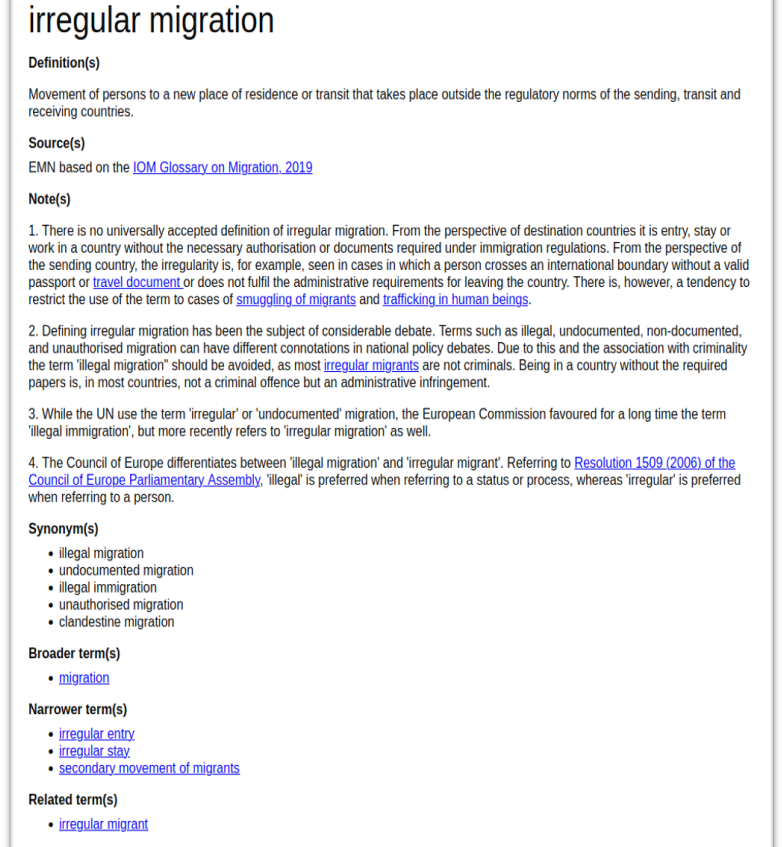
In the age of ‘information disorder’ (see e.g. Wardle and Derakhshan, 2017) where information is often being shared to dehumanise and harm groups of people, using the correct terminology matters especially when false information about immigration is being circulated, as is the case in Ireland (Government of Ireland, 2024). For example, when a person who falls outside the scope of a ‘regular’ migration status (which can happen for multiple reasons) is defined or referred to as ‘illegal’, a term that is often associated with criminality, this can have knock-on effects (see Figure 1 for irregular migration definition).
The ISD at the Department of Justice, Home Affairs and Migration has identified twelve Stamps (0, 1, 1H, 1A, 1G, 2, 2A, 3, 4, 4D, 5, 6) that a person may receive on arrival in Ireland, and is basis of the following step, registering for permission to remain in the state (ISD, 2026). Importantly, not all Stamp-holders can access benefits or use publicly funded services, some Stamp-holders are permitted on the provision of employment, and some Stamp-holders are not accruing time to become a citizen.
People who receive an Irish Residence Permit (IRP) have previously received multiple immigration permissions as listed by the ISD. Certain permissions include an opportunity to renew your permission to remain, the process of which is outlined in ‘Renewing your registration permission if you live in the Republic of Ireland’ (2026a). During 2026, there have been periods of time where applications to renew IRPs have experienced wait times to enter processing that exceed the maximum application window, as set by the ISD.
Why Delays Matter
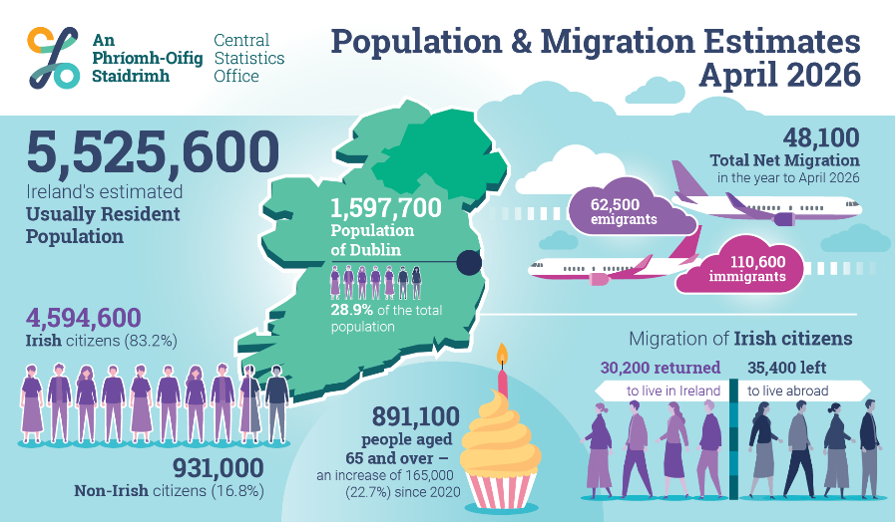
The contributions of migrants has become essential to Ireland’s society and economy. The total immigration to Ireland is estimated to be over 100,000 in each year since the 2022 census. The 2022 census identified that, of the people who immigrated to the State in the year leading up to the census, approximately 25% were Irish citizens (CSO, 2023). Migrant workers occupy key roles in Ireland especially in the healthcare, eldercare, and social care sectors. The International Organization for Migration (IOM) identified that, of the doctors practising in Ireland in 2024, 40% had trained abroad and that, of the new registrants for nursing, 78% ‘came from overseas’ (2026). The Central Statistics Office (CSO) estimates show that, at Quarter 2 2026, 22% of employed citizens were non-Irish (2026a). As of April 2026, 16.8% of Ireland’s estimated usually resident population were non-Irish citizens (see Figure 2).
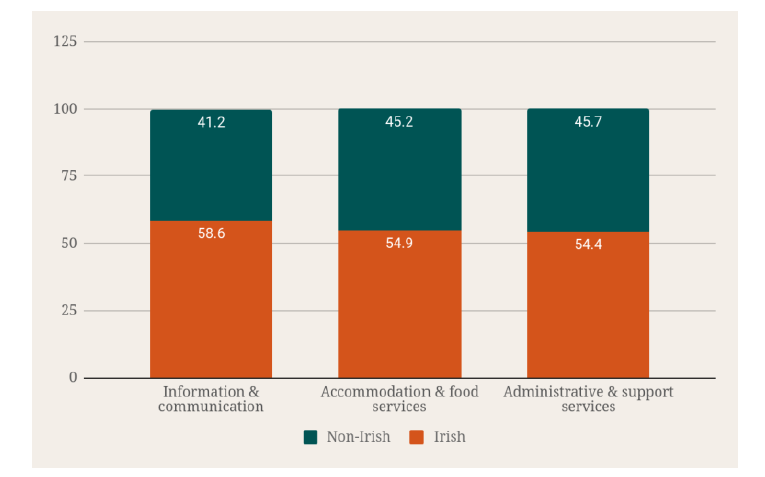
Between 2019 and 2024, non-Irish nationals contributed to 61.4% of employee growth, and three economic sectors in 2024 – information and communication services, accommodation and food services, and administrative and support services – were supported by non-Irish employees making up over 40% of the workforce (CSO, 2026b, see Figure 3). The Economic & Social Research Institute reported in 2026 that the fiscal ratio of ‘foreign-born residents’ compared to Irish-born was 52% and 14%, respectively (ESRI, 2026).
It is important to monitor the wait-time delays in the IRP renewal service to not only track if the service provider is meeting its responsibilities and commitments, but also in order to understand how the public and Irish societal and economic structures are being affected. On the one hand, employers, educational institutions, and financial providers invest resources (time and finances) to adhere to immigration law and processes as set by the ISD, facing penalties if they do not comply with regulations or if they breach immigration law. Yet, on the other hand, this paper argues that the ISD has provided an inconsistent standard of service delivery in relation to IRP renewals despite repeated public commitments stating that they would provide an effective service. This paper argues that current delays to the IRP system has wider effects on applicants and their families as it effectively pushes legal residents to become irregular migrants.
Methodology and Limitations
This paper explores the IRP renewal service delivery in 2026 from January to the end of August in 2026, using available data. To produce an analysis, a mix of qualitative and quantitative information was collated, primarily from the CSO and the official ISD managed website, www.irishimmigration.ie. This information was accessed both directly from the website and from archived pages via the Internet Archive[i].
The specific source of data to analyse the wait time for applications to enter processing was collated from archived captures of the webpage, ‘Renewing your registration permission if you live in the Republic of Ireland’ (2026a). From there, the following calculations were completed:
- Days between data captures – i.e. the total days between the earliest date where a change was published, as captured on the Internet Archive.
- Wait-time (days) before applications enter processing – i.e. the total days between the earliest date where a change was published and the date/s of processing for each category.
- Applications processed (days) since previous data capture – i.e. the total days between the date of processing for each category.
Using these calculations, further calculations were conducted, as listed below:
- Average (mean) applications (days) processed on a daily basis – i.e. the applications processed (days) since previous data capture divided by the days between data captures.
- Days processed for all categories – i.e. the total applications processed (days) since previous data capture as calculated for each category.
- Total workload days – i.e. the days between data captures times by the five categories.
- Processing queue rate – i.e. the days processed for all categories divided by the total workload days, shown as a percentage.
The findings are limited to the minimal data made available from the ISD. It is unclear how:
- Many applications are received on a daily basis by category.
- Long an application takes to process, on average (mean), by each category.
- Many website changes occurred and the operational accuracy of changes.
- People resource capacity by full-time equivalent (full time hours), as changing, throughout January to August in 2026.
Further, as applications can be submitted to the ISD outside of business hours, the methodology is calculated by calendar days, rather than business hours.
Additionally, in preparation for this paper, a Minister of State for the Department of Justice, Home Affairs and Migration was invited to respond to queries on how the IRP renewal process will be enhanced for accessibility and sustainable public service. At the time of publishing, there was no official response.
Findings
People renewing Irish Residence Permits (IRPs) experience issues with the public service that impacts their right to remain, their families, and their dignity as evidenced by the findings of:
- Inconsistent processing queue.
- Wait time to enter the processing stage exceeds the application window.
- Misleading representation of ‘This page was last updated on’ date.
- Insufficient solutions for affected people.
Finding One – Inconsistent processing queue
The processing queue efficiency reflects how many days’ worth of submitted IRP renewal applications are processed in a single day, for all categories and as recorded between data captures. An efficiency rate of 100% says the Department begins processing applications for as many calendar days that have passed. The ISD introduced reporting the wait time for a renewal application to enter processing by five categories of stamps between January and May in 2026. The five categories are defined as:
- 1, 1H; which includes people permitted to work and doctors.
- 1G; which includes graduate students looking for work or partners of key skills.
- 2, 2A, 1A; which includes various student or study arrangements.
- 4; which includes joining a partner, various employment arrangements, and refugee status.
- All other categories; which includes joining a work permit partner and volunteers.
Evidence shows the ISD periodically exhibits high processing queue efficiency, which declines steadily and, when reaching 40% or lower, it dramatically increases to steadily decline again (see Figure 4).
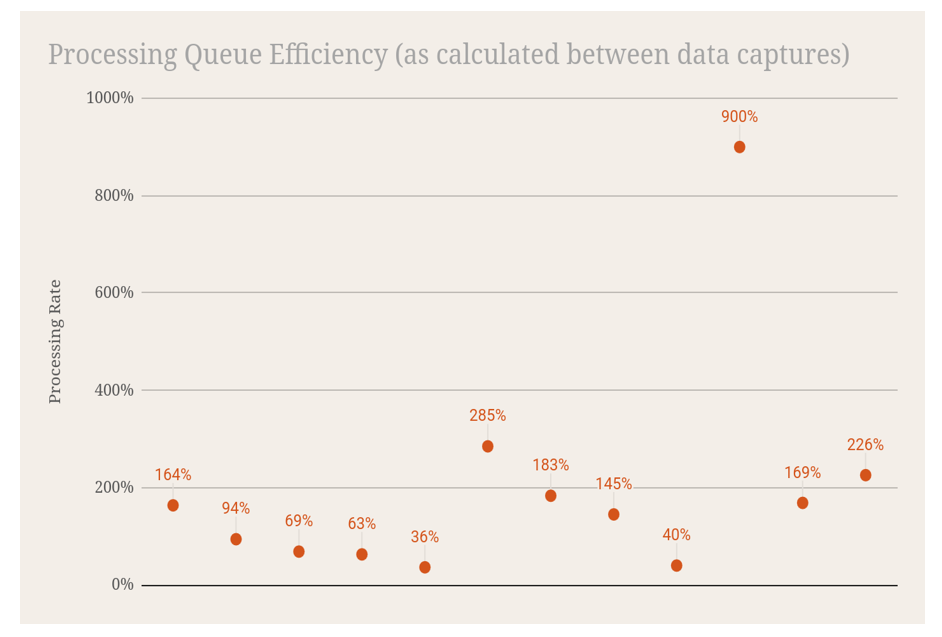
In 2026, data shows that all stamps have experienced days where no new applications were processed, and have experienced days where more than 10 days of applications were processed. The average days’ worth of applications that are processed on a daily basis are between one and six (see Figure 5).
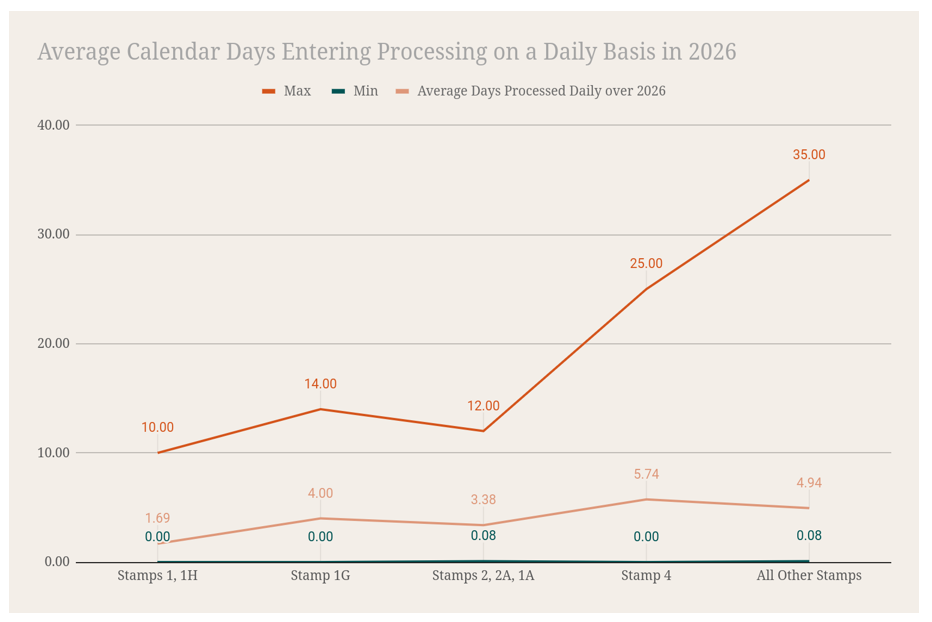
It is unclear how long the department takes to process applications and if the spikes in efficiency correlate with the ability to finalise applications. A pattern of declining public service and a spike in efficiency, when below 40% is emerging.
Finding Two – Wait time to enter the processing stage exceeds the application window
To understand how the processing queue compares with the maximum twelve (12) week, or 84 days, window afforded to applicants, as set by the Department, the following was identified:
- Varying wait time, in days, for each category by data capture (see Figure 6).
- Average wait time by category in 2026 (see Figure 7).
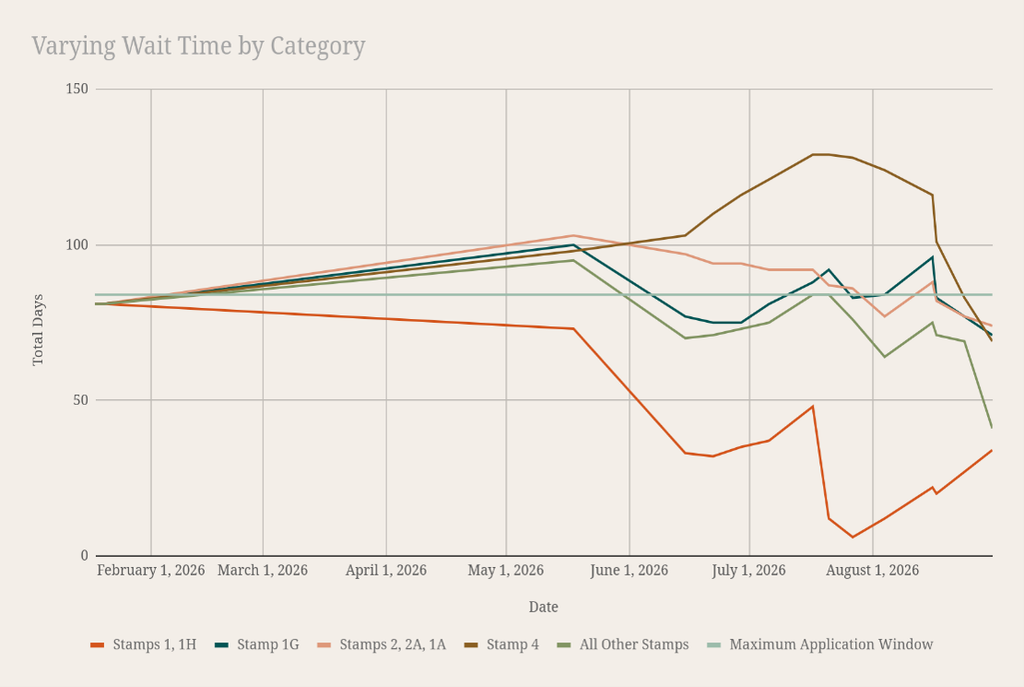
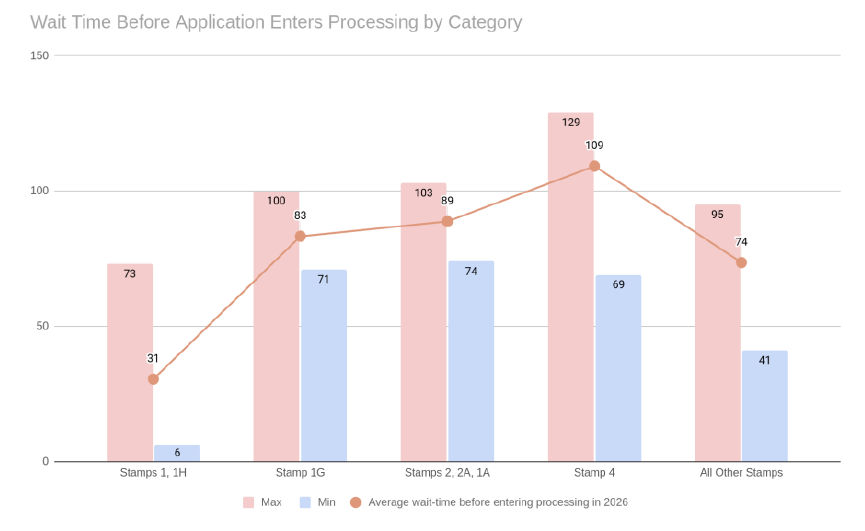
Originally, one processing queue date was provided for all stamps. The change introduced a date for each of five (5) categories. Applicants who receive permissions based on employment, including doctors, and are Stamp 1 and 1H holders experienced the lowest wait times. Stamp 4 holders, (including, but not limited to, people employed with critical skills, a recognised refugee or family member of, and a person under the Investor and Entrepreneur Programme) experienced the highest wait times. In two of five categories, the average wait time exceeds the maximum application window of 84 days, and one category’s average wait time is one (1) day shorter than the maximum application window.
Finding Three – Misleading representation of ‘This page was last updated on’ date.
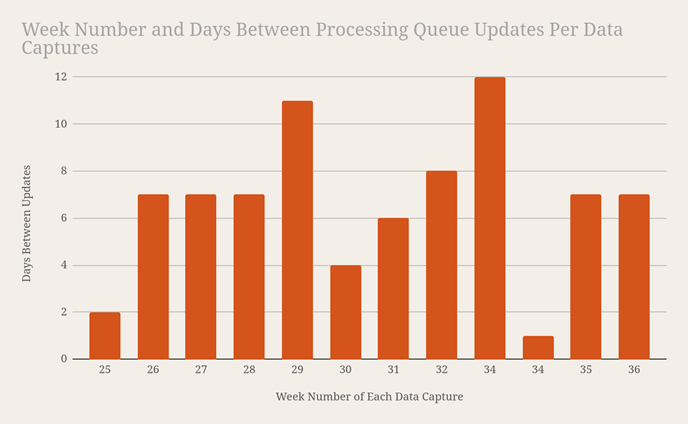
The ISD states that dates are updated weekly (ISD, 2026a). While the data captures show that during June to August 2026, the days between updates fluctuate between six to twelve days (see Figure 8), the website does not maintain the date of the page’s last update. For example, between July 17 and August 27 of 2026, there were at least six updates to the website page, however the date of page update remained July 17. This information can potentially mislead people to believe that the Department may be processing applications faster than they are.
Finding Four – Insufficient Solutions for Affected People
On July 13th, the Minister of State for the Department of Justice, Home Affairs and Migration announced a solution for affected people (ISD, 2026b) that stipulated that affected people could retain their right to remain until August 31st. At the time of this announcement, the wait time for applications to enter processing was as long as 129 days for Stamp 4, which is 45 days longer than the maximum application window set by the Department.
Similarly, on August 27th 2026, two business days before the previous announcement’s expiry, the right to remain until August 31st was removed from the website (ISD, 2026a). As of August 24th, and again published on August 27th, the longest wait before applications entered processing was 83 days for Stamp 4. Considering the maximum application window of 84 days, an applicant that may have applied at the maximum application window would have at been one day from an expired permit before their application may have entered processing.
Impact
The impact of the significant wait times before applications enter processing can be summarised by tangible and intangible impacts and extends to members of the affected person’s families, who may consist of both Irish Citizens and other legal residents. Delays pose the following tangible risks for families with an affected legal resident:
- Employment and income sustainability, where employment could be lost and the individual is unable to evidence residence for a change of job
- Housing security, where the individual may not be able to prove residency to financial institutions, or be unable to finance housing due to employment risks
- Financial obligations
- Access to families, where an applicant may lose the right to remain in the State and be separated from families
- Freedom to travel for work or family emergencies
A 2026 announcement for a proposed change to the citizenship process was made by the Irish Government in which economic self-sufficiency was identified as a contributing factor to the proposal (Irish Examiner, 2026). The long ISD processing wait times create a risk of applicants losing reckonable time towards citizenship. A change in citizenship process without an undertaking of measures to address public service delivery may result in further workload pressure placed onto the Department.
With solutions for affected people announced late or with two business days’ notice, legal residents have been forced to enact or prepare adjustments to all commitments on the contingency of not being supported. These conversations can impact a person’s dignity. These circumstances are beyond an applicant’s control, and potentially impact financial security and obligations, which creates a stressful and, in some cases, humiliating experience for affected people and their families.
Affected people, who are usually required to present evidence of their IRP, are now forced to present multiple forms of evidence and explain the scenario to potentially uninformed and unaffected people, such as employers, educational institutions, and financial institutions. While the affected people have received permission by the Department’s announcements and website publications, the employers and institutions that they interact with may not understand, or be prepared to support, the affected person at the risk of an immigration law breach.
Recommendations
On 22 September 2026, Ombudsman Ger Deering called for his office’s remit to be extended to investigate complaints about the administration of immigration and naturalisation law (Ombudsman, 2026). Further to this legislative change, the Department of Justice, Home Affairs and Migration can consider multiple solutions to ensure Irish Residence Permit renewals can experience a sustainable service delivery and avoid putting Irish residents in vulnerable and potentially irreversible circumstances. The ISD could:
- Implement demand forecasting. By analysing the data of how many IRPs were issued by date and the terms of the permits, the ISD can forecast spikes in demand and make appropriate resource adjustments to facilitate the demand.
- Adjust the application window to a timeframe that the ISD can sustain service delivery, such as a window to apply 24 to 4 weeks prior to IRP expiry, and an express service, at cost, for renewal applications within one month before expiry.
- Publicise accessible feedback surveys and their results to understand the ongoing user experience, and to inform decisions on what areas require attention to improve, and by what priority.
- Enhance the capability of those employed by the service, by upskilling people resources to forecast metrics, streamline processes, and provide enhanced customer service that results in user satisfaction.
- Appoint people resources in line with demand, and backfill any long- or short-term employee leave arrangements.
- Publicise evidence-based information that informs the public of the reason for delays, promptly notifying all IRP holders of changes to the processing queue and other relevant information, showcasing the Department’s achievements towards strategic objectives and commitments, and highlighting current user satisfaction and proposed ISD actions.
Conclusion
The IRP processing queue has fluctuated throughout 2026 (January to August) and has consistently exceeded the application window afforded to applicants. Applicants adhering to the parameters and stipulations set out by the Department may still experience an expired permit before it is considered for renewal.
The findings reveal that the lowest processing queue is for applicants on Stamps 1 and 1H (i.e. people whose permission is reliant on employment and doctors on work permits), and the highest is for applicants on Stamp 4. The processing queue for Stamp 4 impacts the contributions of critical skills in Irish society, affects residents with refugee status, and can risk disruption of reckonable time for a citizenship application. The information presented by the Irish Immigration webpage cannot reliably inform website visitors of the processing queue as it changes throughout the year, with the date of page update not actually reflecting the date of changes made to the page. Solutions for affected applicants can come late or with short notice, with one announcement potentially issued when applicants applying at the maximum afforded window could have been up to 44 days expired.
Applicants affected by the processing queue are impacted by the imminent or potential change to employment and income sustainability, housing security, ability to meet financial obligations, and access to families and freedom to travel. Further, applicants can experience a loss of dignity, particularly when engaging with uninformed businesses and institutions that they rely on for financial and IRP eligibility purposes.
In order to improve service delivery, the Department of Justice, Home Affairs and Migration’s Immigration Service Delivery needs to better forecast demand, adjust people resources as needed, upskill people resources, make accessible customer feedback opportunities, and publish evidence-based information to the public.
References
Central Statistics Office (CSO) (2023) Census of Population 2022 Profile 5 – Diversity, Migration, Ethnicity, Irish Travellers & Religion. Available at: https://www.cso.ie/en/releasesandpublications/ep/p-cpp5/censusofpopulation2022profile5-diversitymigrationethnicityirishtravellersreligion/immigration/ (Accessed 20 September 2026).
Central Statistics Office (CSO) (2023a) Population and Migration Estimates, April 2023. Available at: https://www.cso.ie/en/releasesandpublications/ep/p-pme/populationandmigrationestimatesapril2023/keyfindings/ (Accessed 29 September 2026).
Central Statistics Office (CSO) (2024) Population and Migration Estimates, April 2024. Available at: https://www.cso.ie/en/releasesandpublications/ep/p-pme/populationandmigrationestimatesapril2024/keyfindings/ (Accessed 29 September 2026).
Central Statistics Office (CSO) (2025) Population and Migration Estimates, April 2025. Available at: https://www.cso.ie/en/releasesandpublications/ep/p-pme/populationandmigrationestimatesapril2025/keyfindings/ (Accessed 29 September 2026).
Central Statistics Office (CSO) (2026) Population and Migration Estimates, April 2026. Available at: https://www.cso.ie/en/releasesandpublications/ep/p-pme/populationandmigrationestimatesapril2026/keyfindings/ (Accessed 29 September 2026).
Central Statistics Office (CSO) (2026a) Labour Force Survey Quarter 2 2026. Available at: https://www.cso.ie/en/releasesandpublications/ep/p-lfs/labourforcesurveyquarter22026/data/ (Accessed 29 September 2026).
Central Statistics Office (CSO) (2026b) Business in Ireland 2025 – Labour Market and Social Sustainability. Available at: https://www.cso.ie/en/releasesandpublications/ep/p-biilmss/businessinireland2025-labourmarketandsocialsustainability/laboursupply/ (Accessed 29 September 2026).
Department of Justice, Home Affairs and Migration Immigration Service Delivery (2026) Immigration permission/stamps. Available at: https://www.irishimmigration.ie/registering-your-immigration-permission/information-on-registering/immigration-permission-stamps/ (Accessed 22 August 2026).
Department of Justice, Home Affairs and Migration Immigration Service Delivery (2026a) Renewing your registration permission if you live in the Republic of Ireland. Available at: https://www.irishimmigration.ie/registering-your-immigration-permission/how-to-renew-your-current-permission/renewing-your-registration-permission-if-you-live-in-the-republic-of-ireland/ (Accessed 22 August 2026).
Department of Justice, Home Affairs and Migration Immigration Service Delivery (no date) Department of Justice Annual Reports. Available at: https://www.gov.ie/en/department-of-justice-home-affairs-and-migration/collections/department-of-justice-annual-reports/ (Accessed 05 September 2026).
Department of Justice, Home Affairs and Migration Immigration Service Delivery (2026b) Minister Brophy announces interim Notice to Employers regarding renewal of registration. Available at: https://www.irishimmigration.ie/minister-brophy-announces-interim-notice-to-employers-regarding-renewal-of-registration/ (Accessed 22 August 2026).
Economic Social Research Institute (ESRI) (2026) Literature review on the fiscal impact of immigration Available at: https://www.esri.ie/system/files/publications/SUSTAT141.pdf (Accessed 29 September 2026)
European Commission (2024) Scope and the methodology of the EMN glossary. Available at: https://home-affairs.ec.europa.eu/networks/european-migration-network-emn/emn-asylum-and-migration-glossary/scope-and-methodology-emn-glossary_en (Accessed 20 September 2026).
Government of Ireland (GOI) (2024) Misinformation about migration. Available at: https://www.gov.ie/ga/an-roinn-dl%C3%AD-agus-cirt-gn%C3%B3tha%C3%AD-baile-agus-imirce/bailiuchain/misinformation-about-migration/ (Accessed 29 September 2026).
International Organization for Migration (2026) A health system shaped by migration. Available at: https://ireland.iom.int/news/health-system-shaped-migration (Accessed 29 September 2026).
Internet Archive Wayback Machine (no date) About the Internet Archive. Available at: https://archive.org/about/ (Accessed 05 September 2026).
Ombudsman, Ombudsman Calls for Extension of Remit to Immigration Issues (September 2026) https://ombudsman.ie/en/news/2ac28-ombudsman-calls-for-extension-of-remit-to-immigration-issues/ Accessed 09 OCT 2026
Wardle, C. & Derakshan, H. (2017). Information Disorder: Toward and Interdisciplinary Framework for Research and Policy Making. Council of Europe report DGI(2017)09. Council of Europe: Strasbourg.
Useful Resources
Department of Justice, Home Affairs and Migration Immigration Service Delivery (2026) Welcome to the Irish Immigration Service. Available at: https://www.irishimmigration.ie/
Department of Justice, Home Affairs and Migration Immigration Service Delivery (2026) Entry for non-EU, non-EEA, non-Swiss and non-UK nationals. Available at: https://www.irishimmigration.ie/at-the-border/entry-for-non-eu-non-eea-non-swiss-and-non-uk-nationals/
Department of Justice, Home Affairs and Migration Immigration Service Delivery (2026) Information on registering your immigration permission for the first time. Available at: https://www.irishimmigration.ie/registering-your-immigration-permission/how-to-register-your-immigration-permission-for-the-first-time/information-on-registering-your-immigration-permission-for-the-first-time/
Department of Justice, Home Affairs and Migration Immigration Service Delivery (2021) Publication of the digitisation strategy for Irish Immigration Services. Available at: https://www.irishimmigration.ie/publication-of-the-digitisation-strategy-for-irish-immigration-services/
Department of Justice, Home Affairs and Migration Immigration Service Delivery (2021) A safe, fair and inclusive Ireland – Statement of Strategy 2021 – 2023. Available at: https://assets.gov.ie/static/documents/department-of-justice-statement-of-strategy-2021-2023.pdf
Department of Justice, Home Affairs and Migration Statement of Strategy 2025 – 2028. Available at: https://assets.gov.ie/static/documents/8ecf7c48/Department_of_Justice_Home_Affairs_and_Migration_Strategy_Statement_2025-2028.pdf
[i] A non-profit digital library with a mission to, ‘provide Universal Access to All Knowledge’ (Internet Archive, n.d.).